Guyana is a constitutional democracy led by the president in the executive branch, who is head of government and head of state, and a unicameral legislature, the National Assembly. Elections in 1992 were considered the country’s first free elections, and the most recent elections were held in 2020. The country is organised in a decentralised administrative system in 10 regions governed by popularly elected Regional Democratic Councils (RDCs).
Although the country has a multi-party system, two main parties have dominated the political landscape since the country gained independence: the People’s National Congress (PNC) and the People’s Progressive Party (PPP).
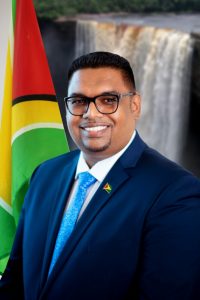
After a period of one-party rule following independence, the PPP took control of Guyana during the 1992 elections and remained in power until 2015, when an opposition candidate was elected. However, the results of the March 2020 elections were challenged due to allegations of fraud, leading to a period of social unrest and political uncertainty for much of 2020. Eventually, the Court of Appeal ruled against the results and instead installed PPP candidate Irfaan Ali as president in August 2020, for a 5-year term.
Economic and social context
Guyana is a growing country. Its GDP in PPP is USD 13,661, which represents a significant increase since the early 2000s mostly explained by oil exploitation since 2016.
English is the main language spoken along with Guyanese Creole, which native speakers refer to as Creoles. However, there are also eight main indigenous languages, spoken mainly in rural regions.
In 2010, 30 percent of the population lived in moderate poverty and 17 per cent in extreme poverty. More recent data on poverty and inequality in the country are not available. However, a large difference between coastal and inland areas is noted.
Educational context
The education system is governed by the Education Act, Chapter 39:01, updated in 1998.
Public education is compulsory and free for pupils aged 5 to 15 and includes at least 3 years of secondary school. An estimated 10% of children are currently educated in public schools and the remaining 90% attend public schools.
Primary school concludes with the National Grade 6 Assessment (NGSA), which determines to which secondary school students will go, but diagnostic assessments are also conducted in grades 2 and 4. A similar assessment is conducted during secondary school.
The Ministry of Education conducts its planning through a series of Sector Strategies and has produced five of them to date, with the sixth plan currently being finalised for 2021-25.
Source:
American Institute for Research. (2021). Guyana´s country review. Santiago de Chile: SUMMA
Photo credit: GPE KIX
Related content
Below, you will be able to identify strategies, research, innovations and country assessments.
Select and visualise different dimensions, variables, indicators and countries by scrolling through a time range of 20 years, which you can download and share.